
NACC Raises Brainstorms Among Government and Private Sector On e-Bidding As Way-out From Corruption?
จากไชต์: Office of The National Anti - Corruption Commission (ONACC)
จำนวนผู้เข้าชม: 394
NACC Raises Brainstorms Among Government and Private Sector On e-Bidding As Way-out From Corruption?
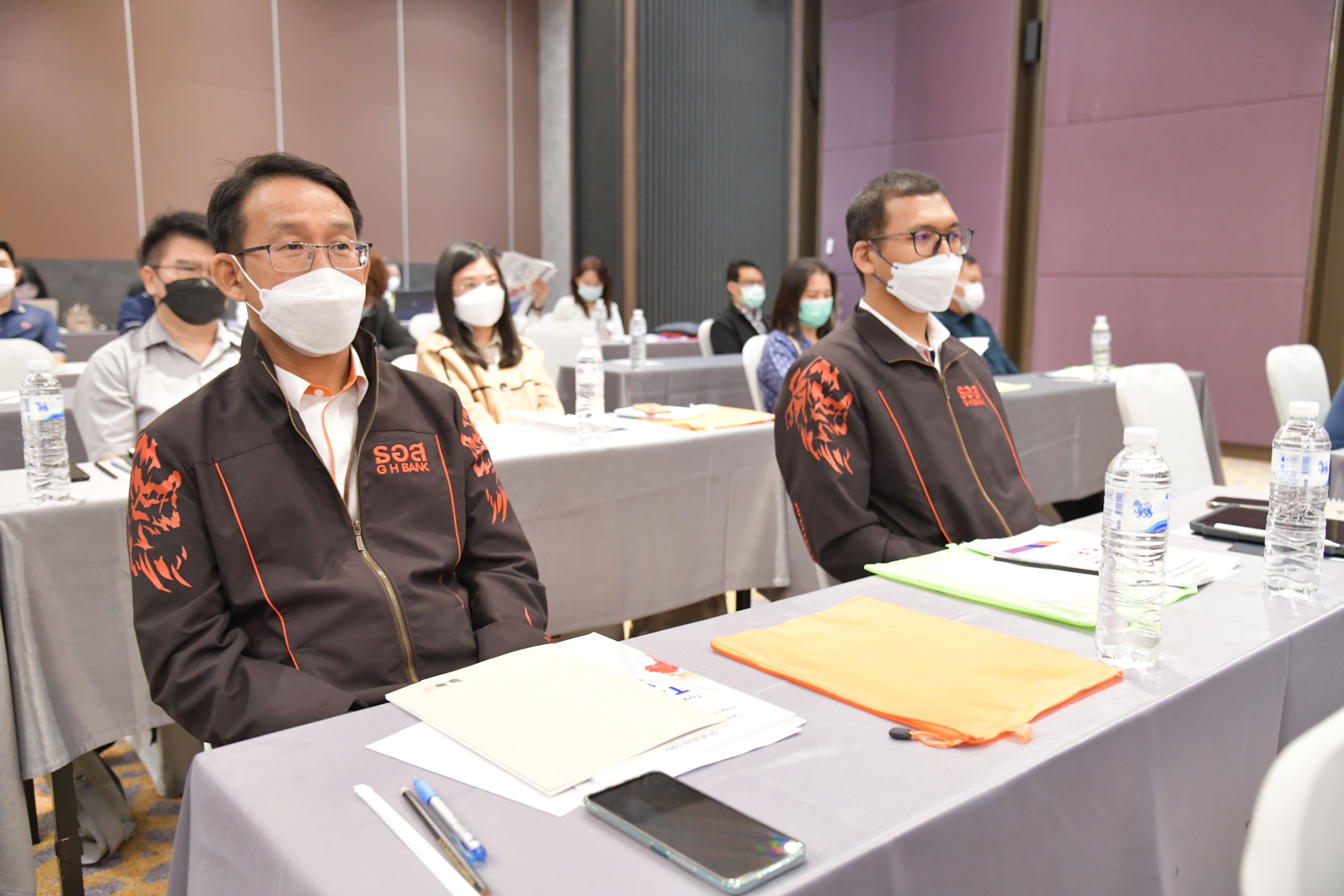
The National Anti-Corruption Commission (NACC) on February 27, 2023, took steps to prevent corruption over government procurement projects which might otherwise pull down the country's Corruption Perceptions Index (CPI) by holding a workshop to raise brainstorms among the government and private sector, given the STRONG Together against Corruption (TaC Team) to enhance the CPI.
The workshop featured the topic of e-Bidding: A way-out from corruption? It referred to the presumption that the money should be used for procurement on the basis of transparency.
Ms. Ladda Duansawang, director of the Office of Proactive Measures and Innovation, said the NACC has conducted an assessment and analysis of the CPI over the last several years and submitted the results to the cabinet on September 1, 2020. The cabinet acknowledged a scheme to boost the CPI in a third stage as proposed by the NACC and assigned relevant agencies to consult with the NACC over five main points.
Point 1: The government policy to address corruption
Point 2: Suggestions pertaining to bribery
Point 3: Conflict of interest
Point 4: Investigation and punishment of the wrongdoing government personnel
Point 5: Transparency and examinability of government budgets and procurement projects.
For that reason, the workshop was held on the topic of e-Bidding: A way-out from corruption under the theme of the STRONG Together against Corruption (TaC Team) to enhance the CPI. That focused on Point 5 which calls for transparency and examinability of government budgets and procurement projects.
Among cases of alleged corruption which have been sent to the NACC headquarters, the procedures for government procurement projects have allegedly incurred problems at varied levels ranging from the laying out of action plans for the projects, the approval of the projects, the selection of contractors, the administration of the contracts and the inspection and acceptance of construction work and procurement to the imbursement of budgets.
Remarkably, the alleged corruption involved the offering and acceptance of mutual interest, conspiracies over bidding prices, conflict of interest and demands by government personnel for a bribe from business operators.
In fiscal 2021, a total of 1,153 cases of alleged corruption over government procurement and construction projects, combinedly worth 8.79 billion baht, were filed to the NACC.
The NACC exchanged viewpoints toward the prevention of corruption over such government projects with the private sector for which legal measures and mechanisms were assimilated for use by the involved government agencies,
Qualified persons invited to the workshop included 1. Mr. Adul Khao-la-or, executive director of the Federation of Thai Industries, 2. Ms. Thaksaporn Rakyoo, legal specialist of the Department of the Comptroller General, 3. Mr. Natthapop Tulyakulroj, director of the NACC's Office of Public Sector Investigation and 4. Mr. Sakchai Chansangwattana, director of the NACC's Office of Investigation of Political Sector Assets.
Mr. Adul said the government procedures have mostly raised concerns to private business operators over the predetermined specifications, either for the implementation of the project or for characteristics of a winning contractor who might otherwise offer undue mutual interest, and conspiracies among bidders who may quote irregular prices at the cost of a state budget. In that manner, the government will procure materials which may not only be of poor quality but also incur a high price.
Whether or not the e-bidding system could prevent corruption in the government procurement or construction process remains to be seen.
Public hearings and appeals for transparency can be requested by private business operators who may have been earlier denied justice. Nonetheless, such problems could be difficult for the government to effectively solve as long as government personnel in charge of the projects themselves are concerned.
Ms Thaksaporn said the Department of the Comptroller General has focused on the transparency and examinability of any project for which regulations have been provided for government agencies to follow to the extent that the private sector be authorized to examine any alleged misconduct on the part of the involved government personnel or have access to data related to the procurement procedures such as the unveiling of the median prices and the names of the winning bidders. That was considered as part of the government's effort to prevent corruption over procurement projects via the e-bidding system.
Mr. Sakchai said the bribery and corruption could adversely affect the CPI and the confidence of prospective investors in the country's investment climate and suggested that legal penalties for bribery charges should not only be delivered to individual persons but also to corporate entities of the involved contractors.
For that reason, a bribe which may have already been demanded or accepted or only agreed to accept should be entirely construed as the same offense.






Related


