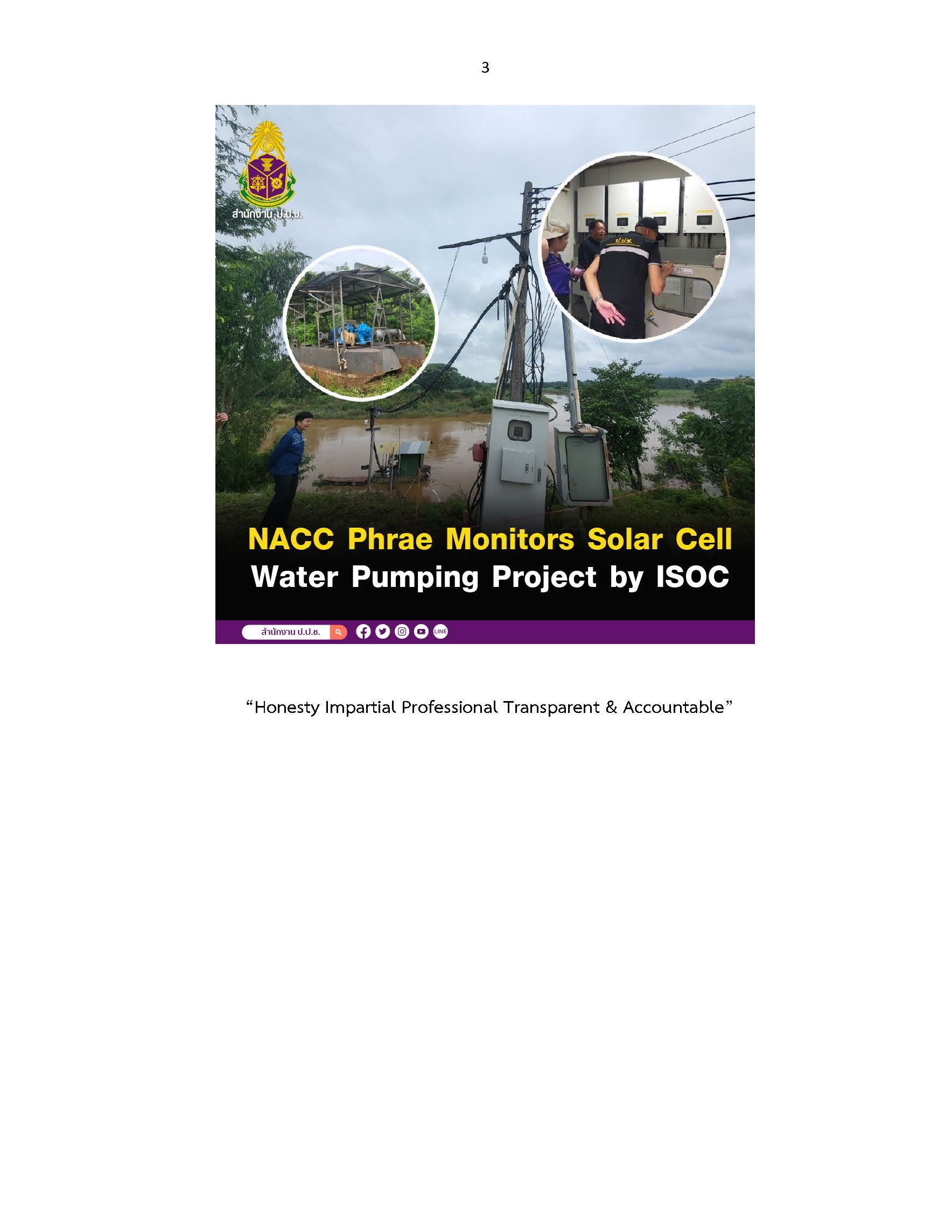
NACC Phrae Monitors Solar Cell Water Pumping Project by ISOC
จากไชต์: Office of The National Anti - Corruption Commission (ONACC)
จำนวนผู้เข้าชม: 167
NACC Phrae Monitors Solar Cell Water Pumping Project by ISOC
The National Anti-Corruption Commission of Thailand (NACC) office in Phrae province has been on the ground monitoring the "Energy Conservation Promotion Project of the Internal Security Operations Command (ISOC)", which employs solar-powered water pumping systems for agricultural purposes. It was found that in two different districts, the water pumping systems were inoperative, leading to a futile waste of resources.
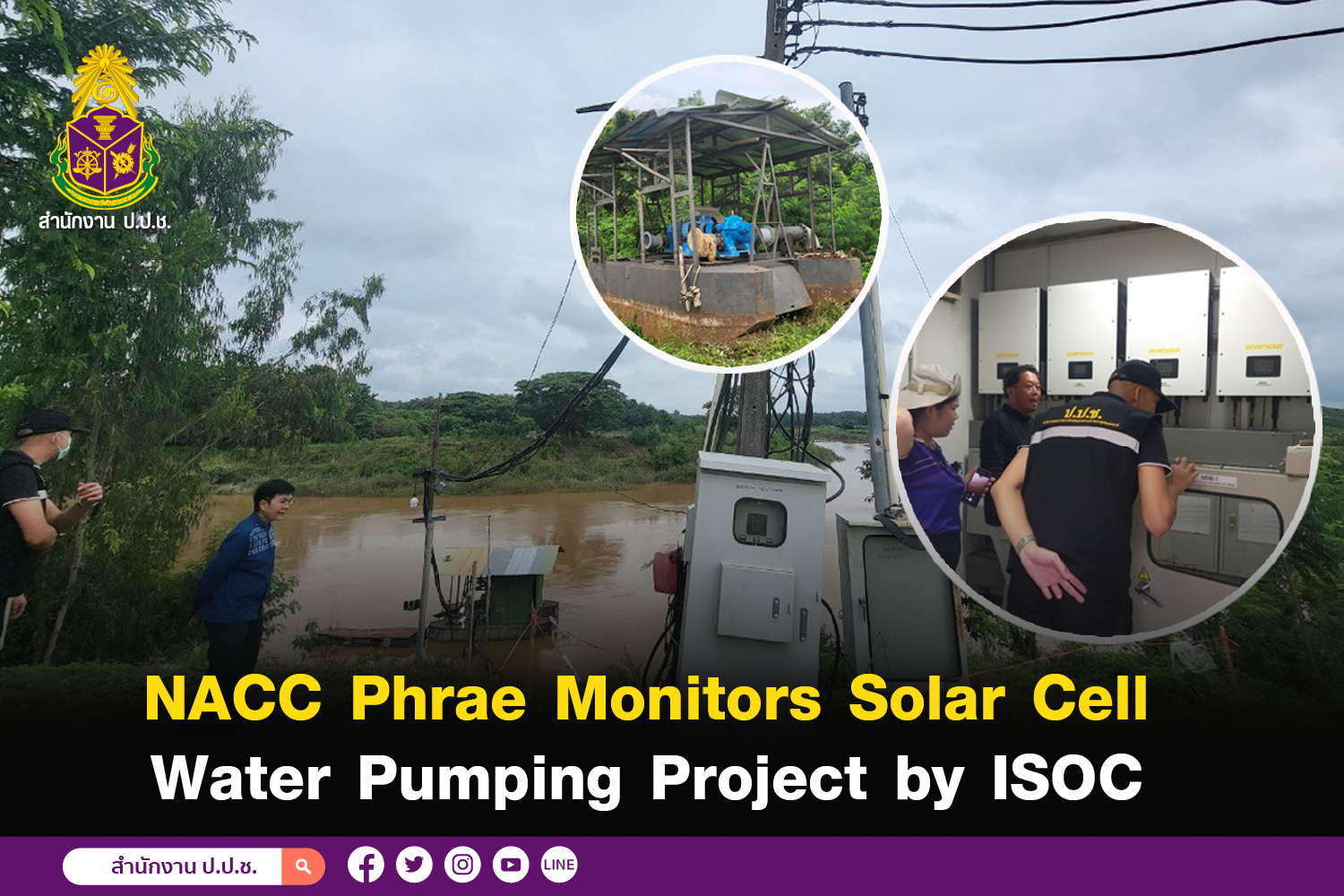
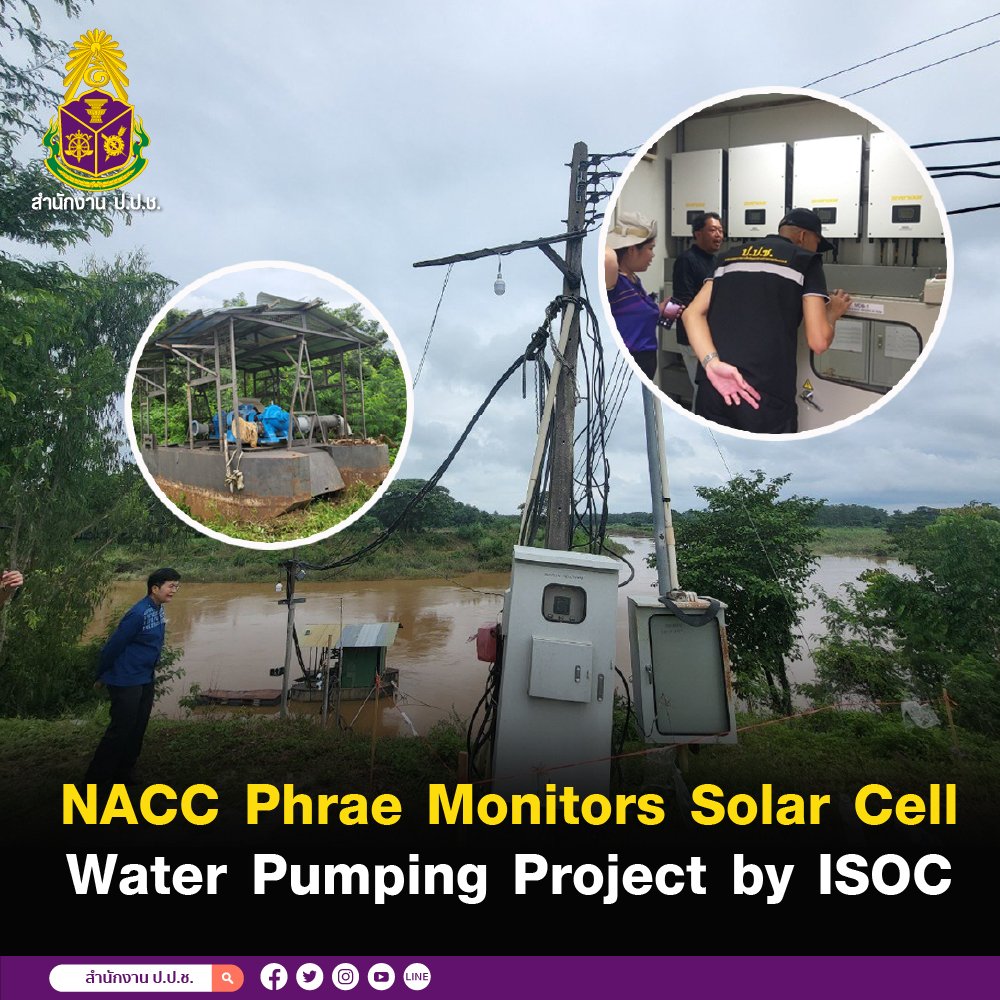
Suran Aphisithiwet, the director of the NACC office in Phrae province, assigned the corruption prevention team to monitor corruption movements at the Subdistrict Administrative Organization of Sob Sai, Sung Men district, Phrae province, and the Huay Mhai Subdistrict Municipality, Song district, Phrae province. This initiative relates to the Energy Conservation Promotion Project by the Internal Security Operations Command (ISOC) 2016, which is a water pumping project for agriculture following the Sufficiency Economy Philosophy of His Majesty the late King Rama IX. The issue centers on the non-operational solar cell water pumping systems, due to leaky water pumps that fail to pump water for consumption or utilization, resulting in their abandonment. Officials, civil servants, and related personnel from the ISOC Phrae, the Subdistrict Administrative Organization of Sob Sai, and the Huay Mhai Subdistrict Municipality shared information and joined the on-site visit.
Additionally, ISOC Phrae provided preliminary information regarding the implementation of this project. It was set up with a budget from the central ISOC and lacks project documentation since the project had handed over construction and equipment for power generation to local administrative organizations to take over and manage at two locations, namely the Subdistrict Administrative Organization of Sob Sai and the Huay Mhai Subdistrict Municipality.
The NACC office in Phrae province then conducted an initial data check and found that both Local Administrative Organizations had already accepted the project management. However, geographical issues impacted the installation of water pumping stations, with each location facing different problems. In the area of the Subdistrict Administrative Organization of Sob Sai, due to the location of the water pumping station on a river bend, the water stream caused the raft to float away, necessitating the removal of the water pumping raft to a nearby area. This caused the electrical system to operate discontinuously, and also damaged expensive hybrid control equipment. ISOC Phrae and the Subdistrict Administrative Organization of Sob Sai will jointly seek solutions and rectify the situation.
On the other hand, in the Subdistrict Municipality of Huay Mhai, the river level affected the placement of water pumping rafts during the rainy season or during floods, prompting the municipality to elevate the water pumping rafts to prevent damage from water currents. Once the flood season ends, the community of farmers would notify the municipality to continue the use of water pumping rafts. The efficiency of solar cell usage in both agencies will also depend on weather conditions and sunlight exposure.
The agricultural water pumping project in line with the Sufficiency Economy Philosophy is established to reduce the use of fossil energy, employing solar-powered water pumping systems for agricultural water pumping, also aiding in reducing production costs. The community participation mechanism in decision-making is utilized, with solar-powered water pumping systems of 100-kilowatt installation capacity in the Sufficiency Economy Village and agriculture areas at five locations;
- Huay Mhai Subdistrict, Song district, Phrae province,
- Sob Sai Subdistrict, Sung Men district, Phrae province,
- Dong Mahawan Subdistrict, Wiang Chiang Rung district, Chiang Rai province,
- San Pai Yang Subdistrict, Mae Taeng district, Chiang Mai province, and
- Tha Khat Noi Subdistrict, Mae Tha district, Lamphun province.
Lastly, the NACC office in Phrae province coordinated with ISOC Phrae, the Subdistrict Administrative Organization of Sob Sai, and the Huay Mhai Subdistrict Municipality to collect data on the overall project operations, forwarding it to the NACC office in Phrae province for further examination and close monitoring of the corrective measures for the aforementioned project.

Related


